
A Cabinet note of the much-awaited legislation is ready and is likely to be put before the state Cabinet in the next 15 days.

Flush with liquidity, banks are eager to lend. And, therein lies the problem, warns Tamal Bandyopadhyay.

The best way to achieve financial security isn't by cutting out every vada pav or limiting yourself to home-cooked meals; it's by making yourself indispensable at work, says Vatsal Ramaiya.

The branch managers have come out of their glass cabins and the sellers' market has transformed into a buyers' market, but there is no end to the harassment of customers, asserts Tamal Bandyopadhyay.

The rally in the equity markets in the second half of 2023 has led to a sharp surge in the cutoff for stocks to qualify as largecaps and midcaps. On the latest list put out by the Association of Mutual Funds in India (Amfi), the smallest largecap stock now has a market capitalisation (m-cap) of Rs 67,000 crore, 35 per cent higher than in July 2023. In the case of midcaps, the cutoff has surged 26 per cent to Rs 22,000 crore.

The message is clear: The 60-year-old wise uncles need to handhold the 40-year-old entrepreneurs when, obsessed with ambition and greed for growth, they become a victim of hubris, points out Tamal Bandyopadhyay.

'Many do not have robust business models, and their prospects of survival and long-term growth are poor.'

Work on a dozen decisions to start by next week.
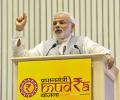
Even if Mudra steps in to play its main role of refinancing at some stage, the responsibility for the bad loans remains with the banks.

In a bid to support revival of sectors hit most by the Covid-19 pandemic, Reserve Bank of India on Friday decided to open a separate liquidity window of Rs 15,000 crore for certain contact-intensive sectors like hotels and restaurants, tourism and aviation ancillary services.

The protocol aims to "democratise" lending, reduce costs of credit, and ensure accessibility of credit to small companies and street vendors, according to Nandan Nilekani.

Postings to places at an altitude above 1,000 metres but less than 1,500 metres, between 1,500 and 3,000 metres, and above 3,000 metres entail different rates of allowances -- the higher the location, the bigger the allowance, reveals Tamal Bandyopadhyay.

A peek into the life of a public-sector banker who did well professionally, but paid a price for it, points out Tamal Bandyopadhyay.

Ajit Mishra, vice president, Research, Religare Broking, answers your queries.

The S&P BSE Midcap and the S&P BSE Smallcap indices have managed to stay afloat in a volatile January that saw the frontline indices hit their respective 52-week high levels and then slip. While the S&P BSE Sensex has lost over 2 per cent thus far in January, the S&P BSE Midcap and the S&P BSE Smallcap indices have gained nearly 2.5 per cent and 4 per cent, respectively during this period.

"My aim is to make Maharashtra the world's big financial powerhouse and to make Mumbai a global fintech capital," he said.
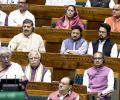
Finance Minister Nirmala Sitharaman on Tuesday announced income tax relief for the middle class, a Rs 2 lakh crore outlay for job creation schemes over the next five years and a spending splurge for states run by her party's new coalition partners as she unveiled the Modi 3.0 government's first budget after the general elections.

The key risk factors would be anti-incumbency, small vote share swings causing large impact on outcomes and the 2004 example.

Bandhan Financial Services, which is to start banking operations soon, has received a combined equity commitment of Rs 1,600 crore (Rs 16 billion) from International Finance Corp (IFC) and GIC, Singapore's sovereign wealth fund.

Farmers have suffered a lot on account of natural calamities.

One thing is for sure: It smacks of the regulator's lack of confidence in the bank's board, points out Tamal Bandyopadhyay.

As real estate investment trusts (REITs) are set to become a reality in the country, small and medium property developers, who constitute 80 per cent of the total realty industry, can now breathe easy.

Of the three major Budget announcements related to the banking sector, privatisation of PSBs is the most audacious, says Tamal Bandyopadhyay.

'While investors need to be prepared for making some losses, they should not lose big money chasing euphoria amid fear of missing out.'

'I think some of us, like Mukesh Ambani, myself and those of us who head industrial units, ought to really focus on what we can really do to make the world a safer place, maybe 50 or 100 years from now.' 'For instance, how can we deal with climate change and global warming, right now?' 'The effects of it may not be felt now; in fact, we may pay a price for it today, but it will help the generations to follow.'

"We will raise Rs 300 crore via bonds of two-, three- and five-year tenures. This will be our maiden bond issuance and is part of our effort to widen funding sources," says Vimal Bhandari, executive vice-chairman and chief executive officer (CEO), Arka Fincap. The firm, a subsidiary of Kirloskar Oil, is only five years old and small (assets of around Rs 5,000 crore with an "AA" rating), but the response to this float will be closely watched: It would be the first by a non-banking finance company (NBFC) after Mint Road upped the risk weights on bank exposures to them by 25 percentage points. The move by the Reserve Bank of India (RBI) has caught NBFCs off guard even though the issue had been flagged by Governor Shaktikanta Das with their corner-room occupants (and that of banks) in July and August 2023 - on consumer credit and the dependency on bank borrowings.

Record liquidity infusion by the central bank in the banking system during the financial year 2020-21 amid sluggish economic activity resulted in banks investing more in safe government papers than in extending loans, data from Reserve Bank of India (RBI) showed. This trend has not been seen in nearly two decades, barring 2016 - the year of demonetisation.

While the COVID-19 pandemic has completely halted production and new orders, exporters say that payments have also been delayed for the shipments sent before the lockdown. Exporters say some customers are not taking delivery of the shipments because they have shut shop. Ready-made garment players had been hoping for a revival in demand in China but with the virus spreading to Europe, the US and other major markets, there are no orders coming from the major retailers.

Control over PSU banks is what is allowing the government to drive this scheme.

Three years and Rs 28,710 crore worth of transactions later, it has more than double the number of sellers than Flipkart.

The Softbank-backed company has set a price band of Rs 72 to Rs 76 per share for the maiden share sale and is expected to test the appetite for new-age loss-making companies.

Stocks of public sector undertakings (PSUs) have been on fire in the past year as investors cheered an improvement in key operating metrics and embraced counters of these state-owned enterprises, analysts suggest. The S&P BSE PSU Index has gained over 90 per cent in the past year, rising much higher than the S&P BSE Sensex, which has rose nearly 19 per cent during this period, according to ACE Equity data. The BSE PSU Index, reports show, has delivered a compound annual growth rate (CAGR) of 28 per cent (including dividends reinvestments) over five years and risen by almost 60 per cent in the past year.
Stocks of small- and mid-cap companies continued to gain ground in July, notwithstanding analysts sounding caution on these two market segments given the sharp run thus far in calendar year 2023 (CY23). Sanjeev Prasad, co-head of Kotak Institutional Equities, in a note co-authored with Anindya Bhowmik and Sunita Baldawa in June-end, had cautioned against the sharp run in small- and mid-caps. "We do not see any particular reason for the excitement in small- and mid-cap stocks.

In days of smart, networked technology and no shame over collateral damage, what will blow up next -- cars, mobile phones, TV sets, refrigerators? And where?, asks Shyam G Menon.

A strong start-up ecosystem can propel investment, jobs, and demand creation, and for that, substantial growth capital is required.

'People in politics have lost the value of being connected to their own people.' 'Now it's all about vote share, vote bank, how many parties can you break and make them join you.'

The S&P BSE Sensex and the Nifty50 have hit record highs amid the poll outcome-triggered bull frenzy at the bourses. Most analysts feel that the indices are on course to rise further over the next few months - till the general elections - albeit amid intermittent corrections - largely triggered by global developments. Bharatiya Janata Party's (BJP's) win in the three state elections of Madhya Pradesh (MP), Rajasthan and Chhattisgarh, analysts at Jefferies believe, reinforces the consensus expectations of a Modi win 2024 national elections with a greater likelihood of over 300 seats for the BJP.

'What's sad today is that there are so many people who cannot find work, not because the country is devoid of that opportunity, but because we are not doing enough in the country.'

India has a huge untapped population which doesn't have facilities for financial aid and insurance, and it is perhaps plausible to look at the option of having niche players catering to smaller sectors akin to non-banks and microfinance institutions in lending, said Rakesh Joshi, member (Finance & Investment), Insurance Regulatory and Development Authority of India (Irdai). Speaking at the Business Standard BFSI Insight Summit, Joshi said, "Today, most of our insurance companies operate at a national level. There is arguably a case for having differentiated operations, which cater to niche sectors the same way we have non-banking financial companies (NBFC) and microfinance institutions in lending." "The capital requirement for niche players may not be as large as those having national ambitions. "Enabling these niche players, which require lower capital, will enhance the penetration in areas which hitherto had not seen traction from large players," he said.

Nearly 40 per cent of IITians sitting for placements in 2024 are yet to receive job offers, showing a doubling of the 'unplaced' in the last three years from 19 per cent in 2021-2022 to 38 per cent in 2023-2024.
 © 2026 Rediff.com - Advertise with us - Disclaimer - Privacy Policy - Sitemap - Feedback - About us - Terms of use - Grievances